
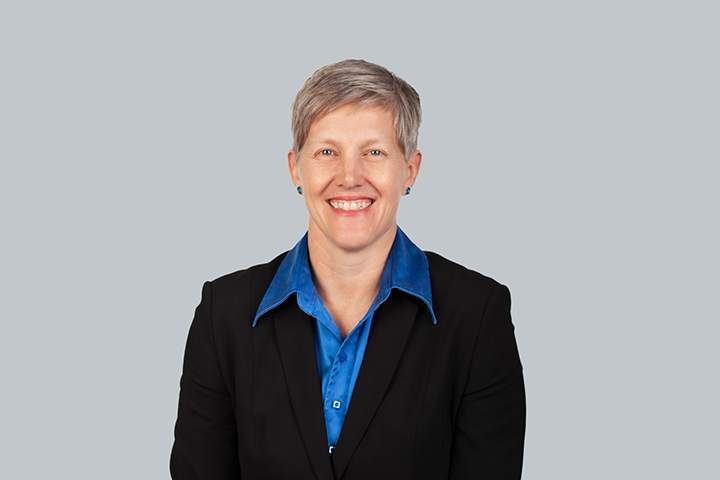
Introducing Melinda Cilento: The importance of agency and SVA’s next chapter
A conversation with Melinda Cilento, SVA’s incoming Board Chair
- News
 7 min read
For many Australians, life is harder than it was before the COVID-19 pandemic. The cost of living, the pace of technological and climate-related change and a volatile global geopolitical and economic environment have left many people struggling with problems they don’t know how to solve.
For our incoming Board Chair Melinda Cilento, the answer lies in agency: ensuring every person and community is empowered with the voice and support they need to shape their own future.
Melinda brings around 20 years of board experience, including a period chairing Reconciliation Australia and more than a decade on the board of Australian Unity.
Her career has spanned the public service, business and the not-for-profit sector, and she is now Chief Executive of Committee for Economic Development of Australia (CEDA). It is that cross-sector view, and a belief that no single sector can solve Australia’s biggest challenges on its own, that she brings to the SVA Board.
We spoke with Melinda about what drew her to SVA, how a chair can help an organisation be confident, curious and courageous, and why she believes agency will be a key success measure of SVA’s 2026-31 strategy, Thrive ‘31.
Q: Welcome to SVA, Melinda. What drew you to the Board Chair role?
Much of my career has been focused on policy and social change, and this has meant that I’ve seen the work SVA has delivered first-hand, including through sitting on the boards of organisations that have been SVA clients. I’ve always been impressed by the approach SVA takes and its preparedness to take risks and really drive innovation.
The people who set it up, like the incredible Michael Traill who I’ve known for a while, came from a commercial background and wanted to bring the strengths and experience they had into social change and broader impact, which aligns with some of my own background.
… SVA often plays the facilitating role and doesn’t always shout about its work, and that’s probably a bit more in my DNA…
Most recently I’ve seen the power of SVA’s work through the lens of being Deputy Chair of Australian Unity. SVA worked closely with Australian Unity on its Community and Social Value framework, which has guided the way the company thinks about its own social impact. The ‘S’ (social) in ESG often gets underplayed and SVA supported Australian Unity to prioritise that by building clear objectives and frameworks to achieve impact.
There’s definitely a cultural alignment too. SVA often plays the facilitating role and doesn’t always shout about its work, and that’s probably a bit more in my DNA as well. Particularly when you’re driving meaty social change, it’s rarely one thing, organisation or party alone that achieves the outcome.
So, in answer to your question, I’ve been watching the organisation for some time and have really respected what is being achieved. When I heard about the role, I thought, “Yes, that’s an organisation I’d be very interested in contributing to.”
Q: You’ve been involved in many organisations with a social impact focus, including CEDA, Reconciliation Australia, the Productivity Commission and the Business Council of Australia to name a few. What learnings from your experience with these organisations would you share with the SVA team?
When you track through a lot of those organisations, the thing that hopefully stands out is that, in one way or another, they’re all similar in purpose. They’re trying to build a stronger Australia, a stronger economy and a stronger society. That purpose of helping people and communities thrive has been a thread through a lot of what I’ve done.
We should focus on the things we agree on, rather than our differences, as a foundation for making progress.
I’ve worked across the not-for-profit sector, in large businesses and in the public service. One of the things I’ve come to appreciate is that each of these sectors brings something to solving problems like the ones SVA leans into, but none can do it on its own.
That’s always floated my boat: understanding that no single person or sector is going to have the answer, and finding a way to bring those ideas together.
I’ve learned a bit about the strengths and weaknesses of the different philosophies and approaches of each sector, and that’s helped me work out how to bridge the gaps and find new ways to drive change.
We should focus on the things we agree on, rather than our differences, as a foundation for making progress.
Q: As Board Chair, what role will you play in guiding SVA through this next chapter, and where do you think a chair adds the most value?
I’ve been on boards for about 20 years now, including a fair bit of time chairing Reconciliation Australia.
I think the most important thing a Chair has to do is create a really trusted and inclusive board environment where the conversations that matter can happen openly. Creating that culture, and enabling the management team to be confident, curious and courageous, is where a Chair adds the most value.
My expectation is… if there are problems, they’ll surface quickly: people will be prepared to share the good and the bad.
From my experience at Reconciliation Australia, when you’re driving big changes that are really tough, the path is rarely the straight line you projected. So, having spent time with the SVA Board, it’s great that they’re the kind of people who can go, “this happened, we’re going to have to pivot, but we’re still heading in the right direction”.
The first thing I’ll be focusing on is getting to know people. It sounds obvious, but that means listening and learning, and not jumping to conclusions. It’s also about starting how you want to finish. For me, culture comes first, so hopefully people will understand from the start that I’m a pretty direct person and that I value openness and honesty.
My expectation is that’s what I’ll get from my colleagues on the board and from the management team, so if there are problems, they’ll surface quickly: people will be prepared to share the good and the bad.
Q: SVA has recently launched its five-year strategy: Thrive ’31. Which parts of it are you most excited about?
Firstly, you want a strategy to be ambitious, and it’s absolutely that. It’s anchored in a clear and inspiring vision and purpose that we can all relate to: thriving people and communities.
It’s also got a clear theory of change. An organisation that really understands how it has influence is far more likely to have the influence it wants. It also clearly defines what SVA can tangibly do to drive that change, with the three pillars of incubate, advise and influence, which you can see reinforcing each other. When you’ve got an ambitious plan with pieces that work together like a positive flywheel, that really stands out.
Particularly post-COVID, I think we’ve fallen into a bit of a malaise. People and organisations often seem to be looking for someone else to solve the big challenges.
I’m increasingly of the view that we need to think more clearly about agency, and how we enable it.
We really need to shift that idea, and this is what’s so exciting about SVA’s strategy. SVA goes in and supports organisations driving change in place and in community. It builds capability, and enables agency.
Looking back across my career, at the policy work I did at Treasury, my work on improving outcomes for First Nations people, and my day job now, I’m increasingly of the view that we need to think more clearly about agency, and how we enable it. If we don’t, we’ll just keep spinning around on the wicked problems.
If I were to put one word on what success will look like, it’s agency.
Q: The strategy’s vision is an Australia where people and communities thrive. Where do you think SVA has the biggest opportunity to make an impact?
For me, thriving people and communities is about investing in and building people’s capability and confidence to say, “We can determine our future”. To be vocal, and even demanding, about the things that really matter to us, and to seek the change we want for ourselves.
Agency is about recognising that every single person has a right to the conditions that give them agency, and the right to exercise it.
If you look at the Productivity Commission’s work on First Nations policy, and its repeated failings, it comes back to the same thing. We’re not listening to people, and we’re not giving people the opportunity to have a say and influence the shape of things. That’s about agency.
In my view, it’s not about handing over power. I understand the empowerment narrative, but empowerment is still about someone who has power shifting it to someone else. Agency is about recognising that every single person has a right to the conditions that give them agency, and the right to exercise it. Whether it’s children and families, community organisations, or how communities engage on climate change and renewable energy, agency sits right at the heart of it.
There’s another benefit too. If you have agency over your own life, I think it’s a little easier to have empathy for other people’s circumstances. So alongside enabling more agency, you also build the capacity for more empathy.
But agency requires certain things. You’ve got to have an education, access to housing, access to food and genuine safety. In our society, the expectation is that government provides that basic safety net, and those foundations create the ability to exercise agency. Without them, there’s no point telling people to go and exercise their agency for their future, because they simply can’t.
Agency is a language that’s really starting to gain momentum.
Place-based solutions face a similar challenge: When you talk to people about them, invariably the successful projects have been led by a person with tremendous capability and energy who has knitted together an ecosystem that allows it all to work. Pick that model up and put it somewhere without that key capability, and it won’t work. So the question is how we create a model that helps you understand what the first piece is, and how you build that capability. I think this is a moment where we have a real opportunity to lean into that.
Agency is a language that’s really starting to gain momentum. We’re trying to do it at CEDA, SVA is doing it, and even the Tech Policy Design Institute is thinking about how we exercise agency strategically in the way we engage with technology, rather than sitting back as if we’re at the behest of the big tech players.
Q: If SVA has delivered on this strategy by 2031, what’s the one thing you’d point to as proof it worked?
It comes back to agency. You can look through the four ambitions SVA is working towards, and within each one, if we’ve enabled the investments and created an environment where people have the foundational elements and the capacity to exercise agency, then we’ll have absolutely delivered against the strategy.
But going right back to the beginning, we’re really clear about our purpose and vision, and really clear about how we think we have influence and impact. We’ve got that theory of change and the enablers that underpin it, so it’s got all the hallmarks of success. And looking around at the people I’ve met, there’s certainly the passion and enthusiasm for it.
Just add water.
Find out more about the SVA strategy, Thrive ’31