
A good start and proud farewell: Rob Koczkar on 13 years with SVA
A conversation with Rob Koczkar, SVA’s outgoing Board Chair
- News
 7 min read
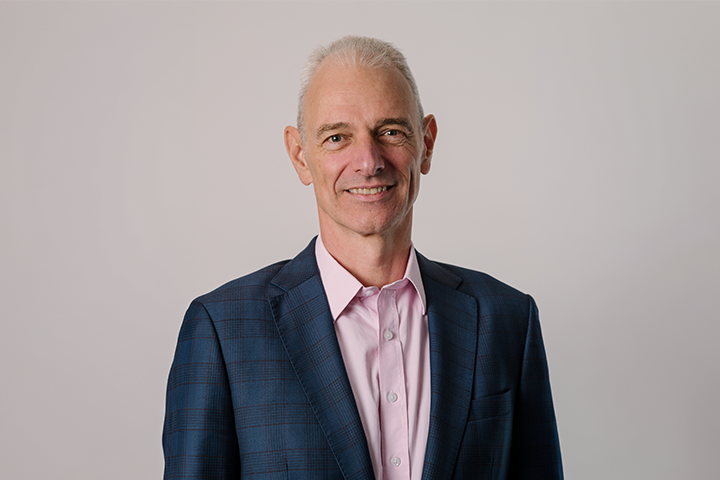
Rob Koczkar was first connected with SVA through the establishment of Goodstart Early Learning, a project that SVA remains part of to this day. Then Managing Director of Pacific Equity Partners, he was highly influential in organising the advisory team and legal support behind the deal that formed Goodstart. He went on to join SVA’s Board in 2013, and became CEO in 2014, before serving as Board Chair from 2020. While CEO, SVA grew from around 40 people to around 100, expanded the consulting team, turned venture philanthropy into a more intentional incubation platform, and led SVA’s social impact bond program with teams across Sydney, Melbourne, Brisbane and Perth.
As he hands the Board Chair role to Melinda Cilento, we spoke with Rob about the culture he inherited from SVA’s founder Michael Traill, the programs he’s seen grow beyond SVA, and why he hopes the organisation will be remembered for changing the way the social sector listens to the communities it serves.
Q: You joined SVA’s Board in 2013 before becoming CEO in 2014. What originally drew you to the organisation?
I first got to know SVA through the Goodstart transaction, but my journey into the for-purpose space really started when my eldest was born. I know I don’t look old enough to have a 20-year-old daughter, but I do, as well as an 18-year-old and a 16-year-old.
Back in 2006, before she was born, my wife Heather and I were asking ourselves what world we were bringing her into.
I thought, if we’re not in as good a place as we were in 1949, then maybe I should be doing something about it.
It occurred to me that I hadn’t done anything in the social impact space for a very long time. After university I went into the business world, where there were lots of exciting things to do, and I moved overseas a few times. Suddenly it was a great opportunity to pause and think. I wasn’t entirely sure the country that my daughter was born into in 2006 was as supportive of people experiencing disadvantage, or needing a hand up, as the nation my dad arrived in when he came to Australia from Hungary in 1949. I thought, if we’re not in as good a place as we were in 1949, then maybe I should be doing something about it.
That led to an introduction to Mission Australia, and I started doing a bit of work with them, which got me involved in the Goodstart Early Learning transaction. Through that I met Michael Traill and began to appreciate what he was doing and what SVA had become by that stage. The conversation with Michael and the board turned to whether I’d join SVA as CEO, and I was delighted to spend more of my time in this space. I joined the board while I was finishing my day job, then started as CEO in 2014.
The people at SVA have been incredibly generous in sharing their deep knowledge, connections and experience with me over more than a decade.
I didn’t quite appreciate how unique SVA is at first. It allowed someone with my background as a management consultant and investor to take those pretty narrow skills and put them into a context where we could work with everyone else in the social sector ecosystem to create positive outcomes for people who are doing it tough.
Q: How has SVA evolved from when you joined as CEO?
There’s a real gift in taking over from a founder. Michael did an amazing job starting the organisation and building a culture that gave people all sorts of opportunities to find what my successor as CEO, Suzie Riddell, would call an ‘SVA-shaped hole’.
Over time we’d found a few of these ‘holes’. Venture philanthropy, consulting and impact investing were all areas where we could contribute in a way others in the ecosystem didn’t. The opportunity for someone coming in was to ask how we focus on the areas where we’re distinctly different, and scale them. That was the challenge I took on, with the Board’s support.
We were really trying to establish SVA as a permanent part of the social sector ecosystem, bringing the core elements of advice, incubation and impact through all of our interactions.
We took the consulting team, which had about 10 people at the time, and grew it to about 40 over the next couple of years.
We evolved venture philanthropy, which had been about funding external organisations, to focus on funding social entrepreneurs working within SVA to incubate and grow new solutions to old problems. That included Bright Spots Schools Connection, Evidence for Learning and Rebuilding the Career Ladder, which all still exist today.
Before I joined, SVA had already managed its first fund, the Social Impact Fund, and completed the Goodstart deal. From there we started working on social impact bonds. We raised a mandate from HESTA, which grew to about $100 million under management, raised the Diversified Impact Fund, and over those few years built six or seven more social impact bonds.
We were really trying to establish SVA as a permanent part of the social sector ecosystem, bringing the core elements of advice, incubation and impact through all of our interactions.
Q: In your tenure as both CEO and Board Chair, what have some of the standout outcomes been?
At some level there are too many to mention, but the first thing is a narrative behind them. Giving voice to the community and letting people articulate their objectives, preferences and constraints, then working with funders to translate that into directing capital to opportunities that will really work, with service providers to shape delivery around what the community needs, is the core of all our successes. It’s about linking community, funders and service providers with the evidence of what really works.
Bright Spots Schools Connection is one example. We worked with independent, Catholic and government schools in different states, bringing together people with similar experiences in their communities to share perspectives on how they could achieve better educational outcomes by working together. That’s now a permanent part of what The Smith Family does, and the ecosystem continues to work.
In the same way, others have come into impact investing and built specialist investment teams, so we can shift our focus and still participate, just differently.
First Australians Capital is another, supporting social entrepreneurs who wanted to build an impact investing and funding organisation to back First Nations organisations as they grow.
The consulting team went from doing relatively small projects, to being a sought-after adviser on how you fund programs effectively, build and scale organisations, drive consolidation in the sector and give voice to the community.
In impact investing, the fact that SVA is no longer as involved as a provider of finance is a testament to our success. Impact investing is now broadly adopted, and there are many specialist organisations focused on property, social innovation and employment opportunities, so we can step back into more of an advisory role rather than being a core facilitator.
It’s the same pathway we took from venture philanthropy to incubation. Others in the philanthropic community built the skills to find great social entrepreneurs and give them the backing they needed. In the same way, others have come into impact investing and built specialist investment teams, so we can shift our focus and still participate, just differently. In a sense, we’ve declared victory on both and moved on to the next piece of white space: the next SVA-shaped hole.
Q: Which elements of SVA’s 2026–2031 strategy are you most excited about?
As I said in my message to the team during the SVA Gathering in late September, if by 2031 we achieve everything the ELT wrote in the strategy paper, I couldn’t have asked for a better 60th birthday present.
The combination of things SVA can do, and our ability to lean into opportunities as they emerge, is the real special sauce.
The aspiration to keep growing our impact across the range of things we do is extremely well articulated. The combination of things SVA can do, and our ability to lean into opportunities as they emerge, is the real special sauce.
I’d like to think that, at one level, we’re all working to put ourselves out of business. But the challenges communities face keep evolving. For example, 20 years ago we weren’t really seeing climate change affect specific communities the way we are now. I don’t know what the needs will be in 20 years’ time, but I’m certain there’ll be something.
If we keep building our skills, reflexes and responses, and along the way build the capacity of the wider community, be that philanthropists, impact investors or perhaps impact technologists in the next iteration, that will be a fantastic contribution. It’s about bringing the best thinking and capability from business and academia into the social sector, so everyone has access to the skills, technology and capabilities needed to support people to live the life they choose.
Q: If SVA is to be remembered for just one thing 50 years from now, what would it be?
I’d like to think people would say, today, that the social sector interacts with the communities it’s trying to serve, and with government as its principal funder, in a more sophisticated and intentional way than it did 25 years ago. I’d love to see it continue to evolve over the next 50 years.
In 50 years’ time, I’d also like to see funders really responding to the voice of the people whose lives they’re trying to support, and delivery agencies being led by the evidence of what will make a difference alongside the preferences of people on the front line. If we achieve that, it will be a strong evolution and embedding of the things that make SVA’s contribution unique.
Q: Any other thoughts?
I could talk for hours about the journey. People talk about SVA as an intermediary, and I always find the word a bit funny, but it’s the connectivity SVA generates that matters. Someone from the organisation is comfortable and respected in pretty much every room in Australia, whether it’s a boardroom, a classroom, an early years setting, a health service, a prison, a government office or Parliament. From there, someone in the network can shape a series of interactions around that connectivity to achieve SVA’s vision. In essence, that’s why SVA is so important.


