
Four questions to guide merger decisions
Mergers continue to be an important option in not-for-profits' strategic discussions. Here, we set out why, and outline how to think through whether a merger may be right for your organisation.
- News
 4 min read

After a period of uncertainty driven by the pandemic and major sector reforms, merger discussions in the not‑for‑profit (NFP) sector have been increasing. Organisations are operating in a tighter funding environment, with workforce shortages and rising expectations around quality, compliance and outcomes. In this context, standing still is rarely an option.
At SVA, we are often asked by NFPs, whether they should consider a merger. Our answer is yes. While pursuing a merger comes with risks, when done successfully the impact gains can be significant. The opportunity to increase, or sustain, their impact should motivate NFPs to include merger considerations as a standard topic in their strategic discussions – just as it is for for-profit organisations. To determine whether pursuing a merger is the right move, we suggest boards and leadership teams reflect on four key questions.
1. What impact do you create and how?
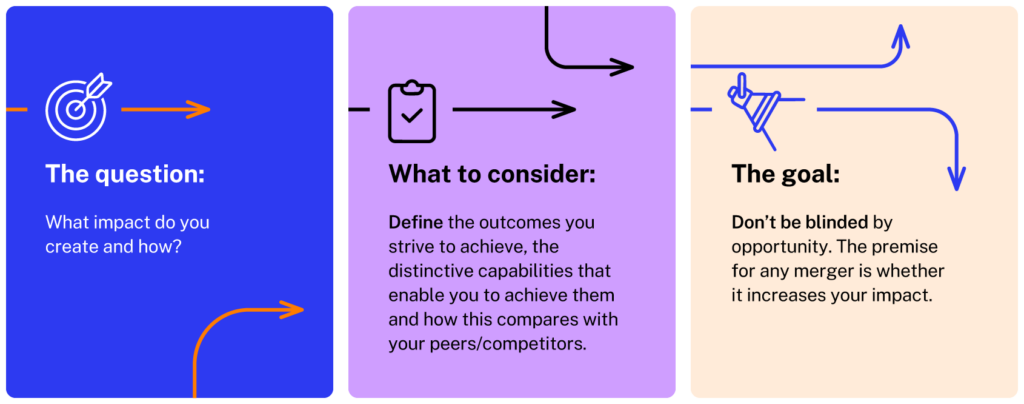
Mergers are complex, time‑consuming and resource‑intensive. The overriding principle that should guide all decision‑making is whether a merger will increase the impact your organisation can achieve.
For this reason, the first question to ask is: what is the impact your organisation strives to create? This requires clarity on the outcomes you are trying to achieve for the people or communities you serve, as well as how you go about achieving them.
It is important to be explicit about your organisation’s distinctive capabilities – what you do exceptionally well that enables you to deliver impact. For example, you may be exceptional in tailoring your services to customer needs, in forging cross-sector collaboration, or in influencing government for system-level change.
Being clear on these strengths helps ensure that any merger discussion is grounded in what truly matters, rather than driven by urgency or opportunity alone.
2. How would a merger help increase your impact?
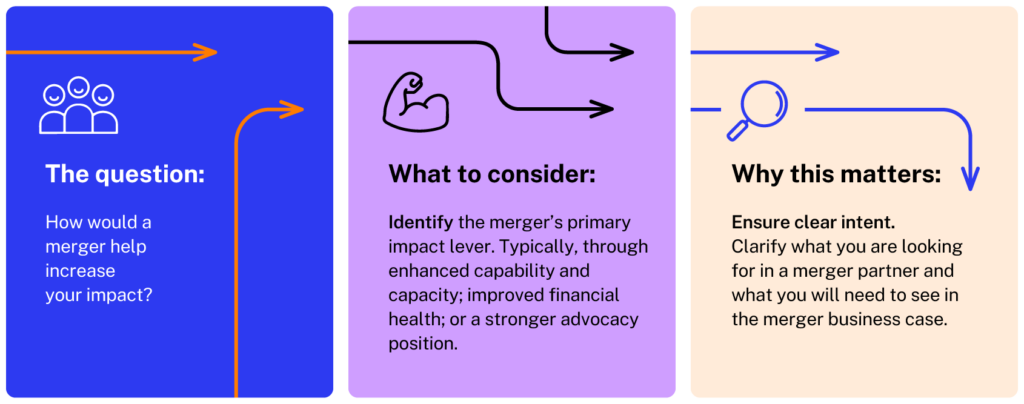
If you are clear on the impact you create, how might a merger enhance that impact?
Typically there are three ways in which a merger may increase your impact:
- enhance capability and capacity by allowing organisations to scale successful models, share expertise and invest in systems or workforce development
- improve financial sustainability by reducing duplication, achieving economies of scale and enabling more efficient use of resources
- strengthen an organisation’s voice and influence, allowing it to better advocate for its clients and shape policy or funding decisions.
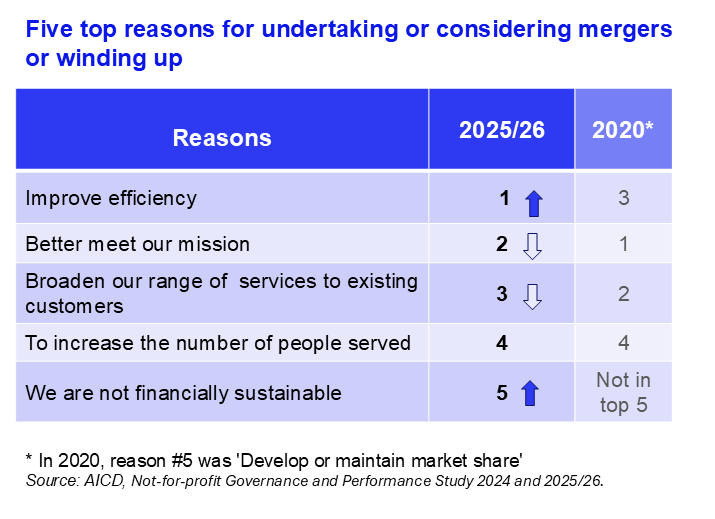
According to yearly Australian Institute of Company Directors’ (AICD) studies, primary drivers for NFP merger activity over the last few years have consistently been related to enhanced capability and capacity, while elements related to improved financial health have been gradually increasing in importance.
3. How do the alternatives compare?
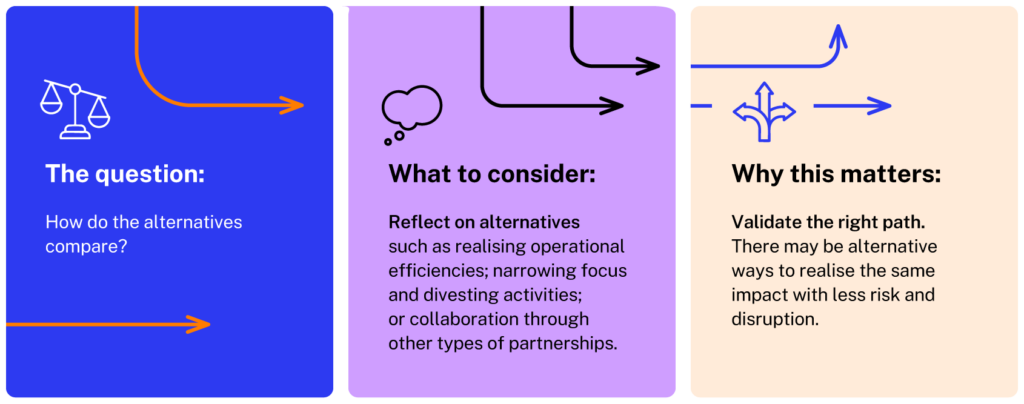
A merger is not the only way to increase impact. Before committing to such a significant step, boards should carefully consider alternative options.
These might include improving internal processes, or narrowing focus to core strengths and divesting non‑core activities. In some cases, collaboration through partnerships or alliances without full integration can deliver many of the benefits of a merger with less risk and disruption.
Comparing a merger to alternative options helps ensure it is pursued for the right reasons. A merger should emerge as the most effective way to increase impact – not simply as the most visible or familiar strategic response.
4. What would it take to successfully execute?
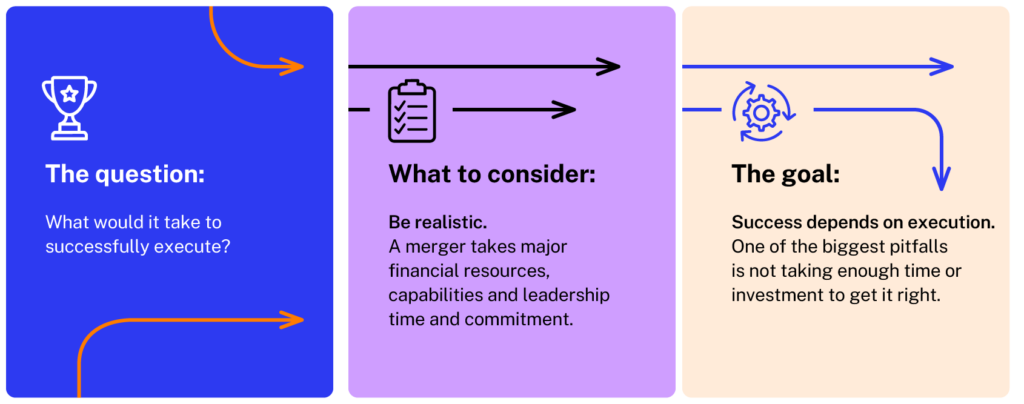
Even when the strategic case for a merger is strong, success depends on execution. This final question asks leaders to be realistic about what it would take to make a merger work.
Successful mergers require significant investment from preparation through to integration. This includes financial resources, leadership time and sustained attention to cultural integration. Differences in organisational culture, ways of working or decision‑making styles can undermine impact if not actively addressed.
Boards and executives also need to consider whether their organisation has the capability and commitment to manage the transition while maintaining service quality and client outcomes. The work does not end when the merger is completed; in many cases, the most challenging work comes after the formal transaction.
Keeping impact at the centre
When approached thoughtfully and grounded in a clear understanding of impact, mergers can be a powerful way for NFPs to better serve their clients and communities.
By asking – and answering – these four questions, boards and leadership teams can make merger decisions that are aligned with purpose, resilient to future challenges and focused on what matters most: maximising impact.
Read a more detailed article on the topic: The four questions to ask when considering a merger.




Related information





First Nations peoples should be aware that this website may contain the images, voices or names of people who have passed away.