
A new model for First Nations partnerships
This case study from Australia’s tropical marine research agency, for which we conducted a social value analysis, offers practical lessons for organisations seeking to build respectful, impactful partnerships with First Nations communities.
- News
 5 min read
SVA acknowledges and pays respect to the Woppaburra people and Woppaburra TUMRA Aboriginal Corporation.
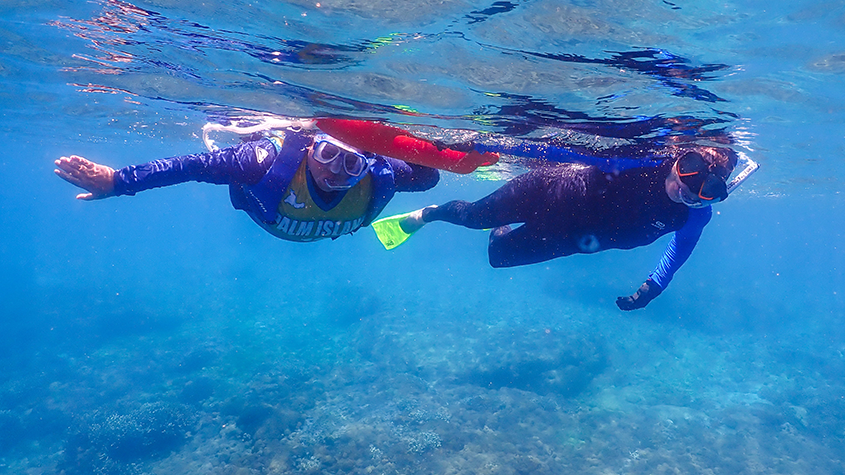
©AIMS, Gemma Molinaro
The Australian Institute of Marine Science (AIMS), Australia’s tropical marine research agency, and a Traditional Owner group have reimagined a way of working together. One which our social value analysis has shown creates genuine partnership and achieves positive change for the First Nations people involved. The analysis demonstrated that when it comes to working in partnership between a government agency and First Nations people, how you work together is just as important as what you achieve.
About the Woppaburra Coral Project
Exemplifying this new model, the Woppaburra Coral Project was a collaboration between AIMS and the Woppaburra people, the Traditional Owners of the Keppel Islands in the Great Barrier Reef. The five-year, $11 million research project explored strategies to restore coral reefs around the Keppel Islands successfully advancing ways to fast-track reef recovery through coral seeding.
The project started in 2019 soon after AIMS had implemented its new approach for working with Traditional Owners. Known as the Indigenous Partnerships Plan, it was designed to move beyond engagement toward genuine collaboration.
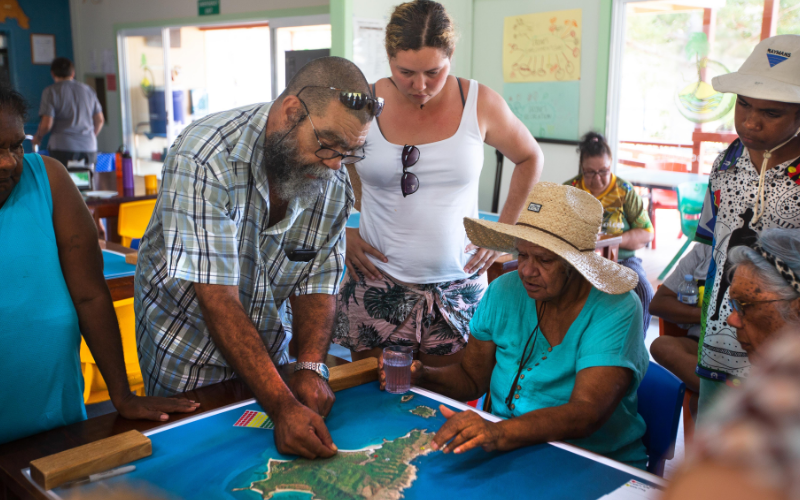
The Woppaburra Coral Project was one of the first AIMS projects to implement partnership activities from this plan. These included relationship building, two-way learning, and support for Woppaburra aspirations.
Our social value analysis
Once the project was completed, our consulting team conducted a social value analysis of the project to understand the changes experienced by participants and organisations, and how partnership activities contributed to those changes.
Our method combined document review, interviews with Woppaburra people and AIMS staff, and valuation techniques. We obtained ethics approval and worked closely with the recognised Woppaburra governance body for sea Country matters, the Woppaburra TUMRA Aboriginal Corporation (WTAC)1 to ensure that consultation and analysis was culturally informed and respectful.
Genuine collaboration creates unique outcomes
The key finding of our analysis was that the collaboration has created unique and beneficial outcomes. We identified outcomes for Woppaburra people, AIMS staff, and other stakeholders related to the following six themes:
- Establishing a genuine partnership. AIMS and the Woppaburra people built trusted relationships through joint input into project design, regular communication and ongoing consent processes. This set a new standard for ethical and effective partnerships for both parties.
- Returning to Country. A series of on-Country workshops enabled Woppaburra people to reconnect with their ancestral lands, family, and culture – creating healing, belonging, and a renewed sense of identity.
- Building employment pathways. The project created tangible opportunities for Woppaburra people to study and work on Country, including participation in scientific field trips, as well as traineeships and roles at AIMS.
- Learning about marine science. Two-way learning activities expanded Woppaburra knowledge of reef health and restoration, inspiring people to become active in ranger and land care programs and supporting informed decision-making about sea Country.
- Learning about Woppaburra culture. Cultural knowledge was shared, revitalised, and incorporated into scientific practice – shifting perspectives and embedding cultural protocols into research.
- Sharing the partnership model. The success of the project raised the profile of both partners, led to reputational and organisational growth, and created a foundation for knowledge-sharing across sectors.
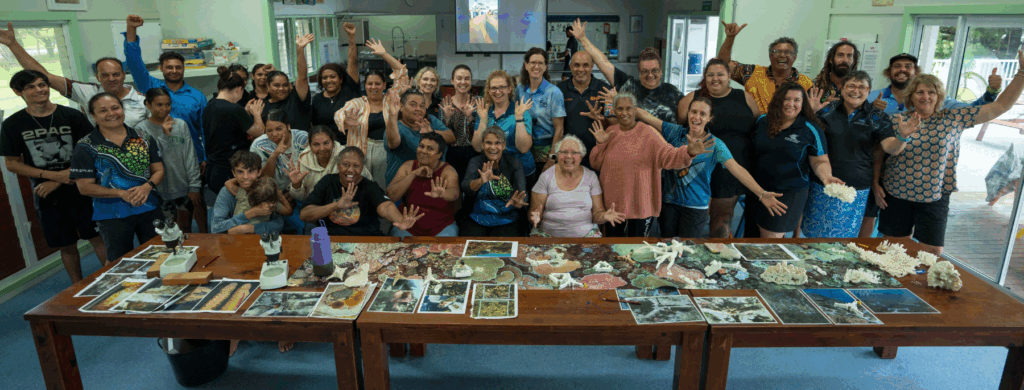
©AIMS, Gus Burrows
Stories of impact
Enacting Free Prior and Informed Consent
One of the most important shifts in the Woppaburra Coral Project was AIMS’ approach to Free Prior and Informed Consent (FPIC) – a principle that upholds First Nations peoples’ right to self-determination by allowing them to approve or reject activities on their Country.
Typically, research institutions obtain permits from the Marine Park Authority, which requires consultation but not adherence to Traditional Owner advice. AIMS went further: if the Woppaburra governance body for sea Country did not consent, the activity did not proceed.
This wasn’t a one-off. AIMS practiced rolling consent, providing regular updates and seeking approval for changes. Technical information was translated into plain language and visual representations, enabling informed decisions. This approach built trust and gave Woppaburra people genuine control over what happened on their sea Country.
Free Prior and Informed Consent is showing the respect that Traditional Owners should be the final decision makers… We’ve heard that just being given that decision-making role is an enormous benefit.”Libby Evans, AIMS

Although some AIMS staff initially worried about financial risks of this new approach such as losing permits or contracts, the long-term benefits proved greater. While a few opportunities did not proceed, the approach strengthened AIMS’ credibility, deepened relationships with Traditional Owners, and opened doors to future partnerships.
Supporting Woppaburra people to return to Country
For many Woppaburra people, the project provided their first opportunity to return to Country since their ancestors were forcibly removed from the Keppel Islands in 1902. Two on-Country workshops brought 76 Woppaburra people together, strengthening connections to family, culture, and Country.
Based on programs run by the Healing Foundation that create comparable outcomes, this analysis valued the return to Country activities at $6.4 million. This figure reflects the deep emotional, cultural, and social significance of the experience.
Going back on Country… that’s been a wonderful thing. Especially given all the trauma and all the bad things that happened to our ancestors.”Woppaburra Traditional Owner
It allowed people that stronger connection to Country… It was a truly liberating experience.”Sonny Van Issum PhD, Woppaburra Traditional Owner
The Woppaburra coral dance
One of the most significant cultural outcomes of the project was the creation of the Woppaburra coral dance.
During an on-Country workshop on Konomie (North Keppel Island), Woppaburra participants learned about coral spawning – a natural phenomenon where corals release reproductive cells in synchrony with the full moon. As the science unfolded, one of the Woppaburra Traditional Owners saw powerful parallels between coral spawning and their own history: the dispersal of coral larvae across the reef mirrored the forced dispersal of their ancestors across the mainland following colonisation. Inspired by this connection, she choreographed the dance, and everyone came together under the ‘long seed’ tree to learn and perform it.
Creating the dance was a gesture of gratitude… For a lot of them it was their first corroboree ever. That was liberating to see. The dance made mob feel more connected to the science of it all. And now there is a connection between AIMS, the coral, and Woppaburra people. It is more than just a research project.”Meaghan Cummins, Woppaburra Traditional Owner
Lessons on how to establish genuine collaboration
Our analysis revealed the Indigenous Partnerships Plan activities and ways of working that were fundamental to the success of the Woppaburra Coral Project. These practices not only shaped the outcomes experienced by both partners but also offer practical lessons for building genuine collaboration.
The following Indigenous Partnerships Plan activities were central to creating an effective partnership between AIMS and Woppaburra people:
- Build trusted relationships via governance structures that have recognised cultural authority to speak on behalf of the Traditional Owner group.
- Seek Free Prior and Informed Consent and respect Traditional Owners’ right to give or withhold consent.
- Incorporate Traditional Owner aspirations into project design.
- Embrace two-way learning between partners – in this context this meant sharing modern science and traditional knowledge.
- Respect and adopt cultural protocols in your way of working.
- Resource joint projects with sufficient and flexible funding and time to allow meaningful implementation of agreed activities.
- Recognise Traditional Owner contributions in project outputs and communications.
- Celebrate the partnership and share successes so that other institutions and Traditional Owner groups can learn effective practice.
More than a reef restoration project
The Woppaburra Coral Project is more than a reef restoration initiative – it is a blueprint for how institutions can walk side-by-side with Traditional Owners to create shared value. Deliberate investment in relationship-building, culturally safe practices, and a willingness to embrace new ways of working leads to measurable and meaningful impact.
It’s the first time I’ve been invited to the table… That gesture and that buy-in was massive.”Josh Morris, Woppaburra Traditional Owner
For organisations seeking to deepen their impact, the message is clear: you can increase the value of your partnerships – by adopting Indigenous Partnerships Plan activities into your own partnerships.
The social value methodology offers a powerful way to evaluate and validate the outcomes an organisation or partnership creates. This analysis demonstrated that when it comes to working in partnership between a government agency and First Nations people, how you work together is just as important as what you achieve.
Notes
In 2007, Woppaburra people negotiated a Traditional Use of Marine Resources Agreement (TUMRA) with the Great Barrier Reef Marine Park Authority and Queensland Government. This transitioned into the incorporated body, WTAC, under ORIC in 2022. See the Woppaburra TUMRA Aboriginal Corporation website for further details about their work. Based on programs run by the Healing Foundation that create comparable outcomes, this analysis valued the return to Country activities at $6.4 million. This figure reflects the deep emotional, cultural, and social significance of the experience.
For more details of the Indigenous partnership and its benefits, read the full report: Walking side by side: a new model for Indigenous partnerships.




Related information


First Nations peoples should be aware that this website may contain the images, voices or names of people who have passed away.