
Why regional Australia is ready to measure its own impact
Following the publication of Renee de Jong's op ed about building the backbone in local communities, Sara Bergmann shares what she learnt on a recent trip back home to Broome.
- News
 5 min read

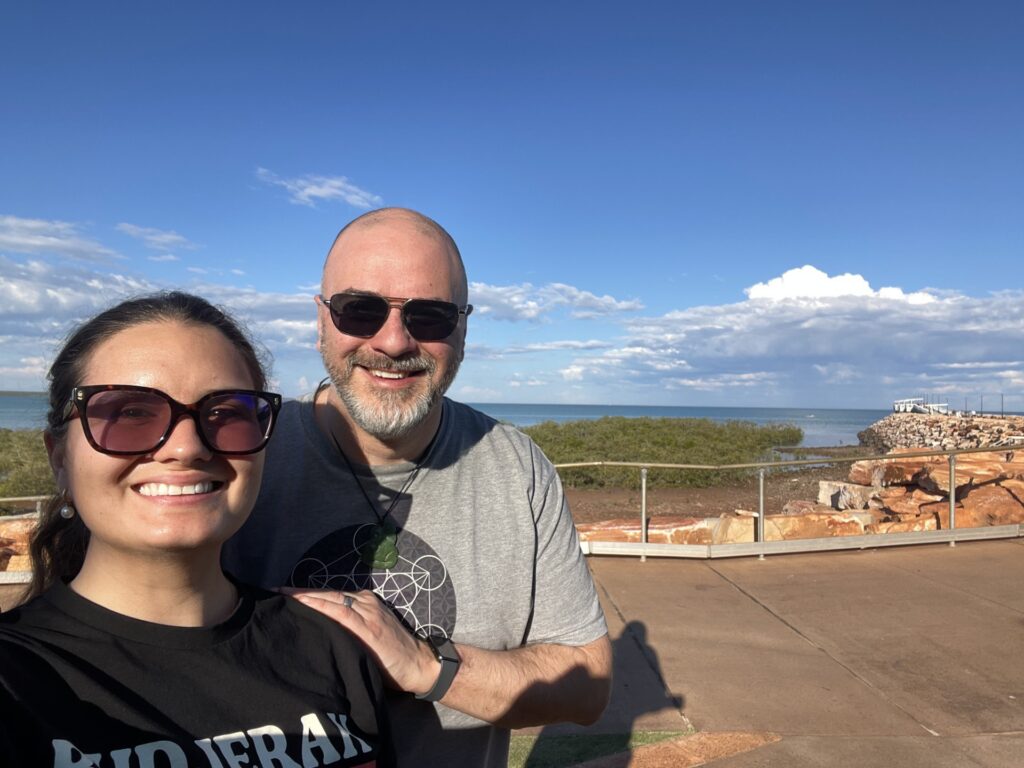
Over Christmas, I went home to Broome and spent a few weeks catching up with people I know and coming to understand more about the exciting work that local organisations are doing in the Kimberley.
I learned that despite having program funding to evaluate the impact of their work, many of these people didn’t know what outcomes management was.
For some, not knowing the jargon, like what an impact narrative, theory of change, or outcomes framework is, meant they had simply stopped responding to emails from their consultants. They didn’t feel they had the expertise to answer their questions.
These catch ups quickly turned into impromptu crash courses. They came to understand that their consultants were only asking questions to guide and tailor their approach to the evaluation. And that it was okay if they didn’t have an answer because they could work together to find one.
Other conversations revealed that local community and project leaders were navigating an increasingly complex funding landscape. Some leaders had heard about outcomes management and wanted to use it to understand how to drive performance, communicate the impact of their work, and feel confident talking about the evidence of that impact when sitting across the table from potential funders.
Getting back on the plane to Perth I felt worried that a lack of understanding of outcomes management in the Kimberley might prevent it from being used and its benefit and value being realised. I want to see a future where the aspirations of Kimberley people are achieved because the programs and projects that have a real impact on the communities get the funding they need.
It became clear to me that a lack of formal training in outcomes management for local people was a significant barrier to consistent, evidence-based, impact-led decision making in the Kimberley.
So, after a few conversations with the team at SVA, we decided to bring the training to them.
In partnership with Simon Faivel, the Consulting Director who leads the Social Value practise at SVA, and Founding Chair (now co-Chair) of the Social Impact Measurement Network of Australia (SIMNA), we developed two workshops tailored to the experiences and contexts in which people work within the Kimberley. We offered a hands-on deep dive for project leads and a strategic session for busy executives. And we didn’t ask local organisations to dial in. We delivered them in Broome.
The overwhelming response from people on the day? Shock.
“We always have to travel to Perth for this,” they told us.
There are many reasons why this expectation shouldn’t be the norm. There needs to be a fundamental shift toward investing in the capacity and capability of local people in remote and regional Australia, because it will make outcomes management and evaluations more appropriate, culturally safe, and cost-effective.
Appropriate local context
There are smart, capable, and deeply committed people running incredible programs across regional and remote Australia. To live and work in these places, you have to be adaptive, responsive, and a problem solver, simply because the solutions that work in metropolitan areas often fail out here. In the regions, community drives business. Organisations don’t just operate in silos to achieve individual goals; they collaborate for the collective benefit of the entire region, understanding that each plays a vital role within the local ecosystem.
People who aren’t from these places don’t understand the hidden rules and relationships that dictate the social makeup of these communities. That inherent local context is exactly what makes or breaks an outcomes management plan when it comes to effective data collection and reporting.
Culturally safe
True cultural safety cannot exist in a fly-in, fly-out model where strangers travel to regional and remote communities, hand out information sheets, extract responses, and disappear the next day. Regional communities have endured this transactional approach to ‘research’ and ‘consultation’ for decades. It lacks relationship-building and has left communities deeply sceptical of the intentions of visitors. As a result many communities no longer engage with ‘new’ people.
People from the region understand the practical realities of working in these places, such as the fact that at certain times of the year, travel between communities is impossible due to road closures from flooding. Or that literacy levels can vary considerably across the region, meaning many people will feel much more comfortable having a conversation than filling out a short questionnaire or an online survey.
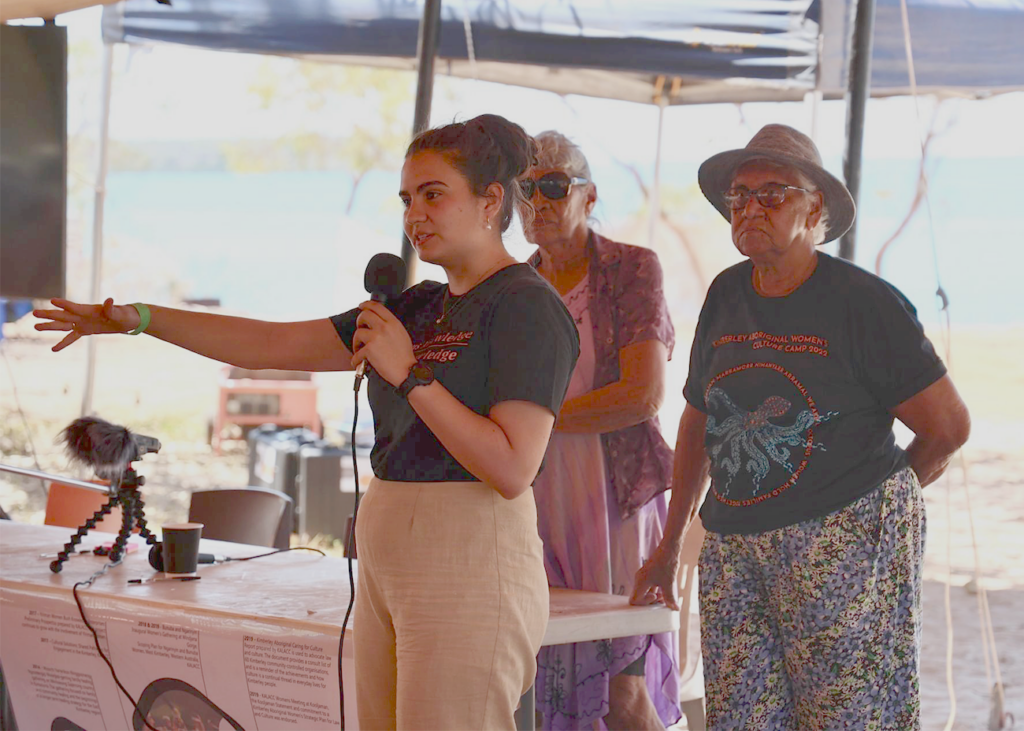
Local leaders already understand regional practises around data sovereignty. They know which organisations are already collecting research and on what, and have the established relationships to request the information. This ensures the community isn’t over-consulted, because new people came and asked them the same questions someone else already has.
In most cases, having a familiar face gather data is far more trauma-informed and culturally appropriate, as most people will not feel comfortable opening up about their experiences with a stranger. It ensures the entire process is respectful, safe, and captures a genuine reflection of the community’s experience, not just an outsider’s interpretation of it. This approach may raise concerns around independence of the data being collected, however not all evaluations require independent evaluation, or the method of data collection can be adapted to mitigate the risk.
Cost effective
The funding sector is rightfully shifting its focus toward outcomes management and tracking real impact. However, we need to ensure that the way we evaluate these programs makes financial sense.
Diverting crucial funding away from program delivery to pay for the flights, accommodation, and the travel time of consultants from major cities is an inefficient use of capital, especially when those consultants lack the local context needed to extract the most valuable insights.
The most sustainable and cost-effective approach to impact driven investment in the challenges regional and remote Australia experience, is to equip the people already living and working there with the skills to design and lead their own outcomes management and evaluation approaches. This means that many funders, consultants and evaluators, need to fundamentally shift their investment and approach to their work.
During our workshops, we saw firsthand what happens when you give the tools to the local community. Executives spoke about how not-for-profit organisations (NFPs) and Aboriginal Community Controlled Organisations (ACCOs) can reclaim their power with funders, instead of merely tracking the compliance metrics dictated by the funders, they can measure the outcomes that actually matter to them and their stakeholders.
Resource companies were in the room with the Prescribed Body Corporates (PBCs) they support, learning the same language and realising that the agreements they had written were tracking outputs rather than the changes they wanted to see in the communities.
For some leaders it ‘clicked’ as to why their efforts to communicate to their employees what they were trying to do had not landed. And they walked away with frameworks and tools that would enable them to clearly communicate this to them. The capability is there; it just needs to be unlocked.
Outcomes management isn’t just about data; it’s about people. Local leaders know better than anyone else how to work alongside their communities, adapt to regional complexities, and navigate nuanced cultural contexts.
True impact is locally led. It’s time we ensure the capacity and capability to measure it are local too.
Written by

Share this article


Copied to clipboard

Get in touch
Contact the consulting team to learn how we can support your organisation or program
Related information




First Nations peoples should be aware that this website may contain the images, voices or names of people who have passed away.