

What value means for First Nations peoples
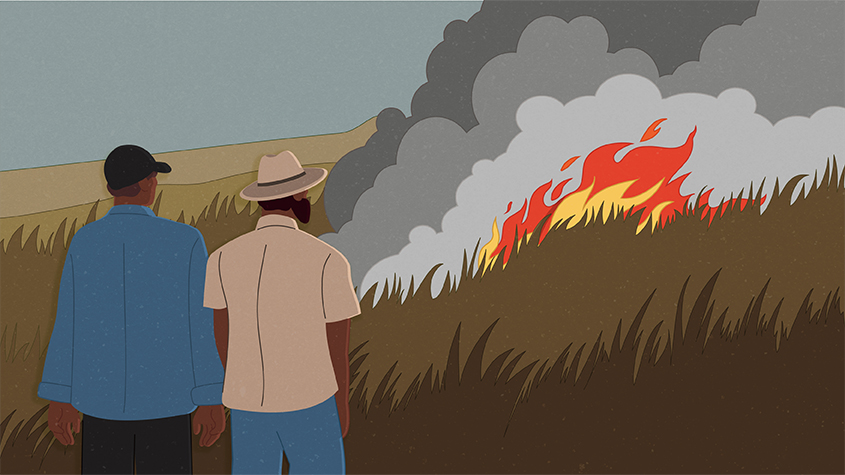
A recent webinar exploring the meaning of value from First Nations perspectives revealed a worldview that challenges conventional financial thinking and offers a more holistic, sustainable approach to decision-making.
- First Nations
 5 min read
Summary
- The webinar explored how First Nations peoples define value through relationships with land, culture, and future generations, contrasting with Western systems focused on short-term financial gains.
- The Yawuru framework, grounded in Bugarrigarra, emphasizes interconnected pillars — healthy country, strong community, true prosperity, and accountability — aiming for holistic well-being and sustainable decision-making.
- Panellists called for evolving business practices to include cultural and intergenerational metrics, highlighting that integrating First Nations perspectives is both a moral and strategic imperative for resilience and long-term impact.
Value Australia hosted a webinar on the topic of ‘What value means for First Nations peoples’. Facilitated by Adam Davids, CEO of Career Trackers and also on SVA’s Board, the webinar featured Nini Mills, CEO of Nyamba Buru Yawuru, and Simon Faivel, a non-Indigenous Director of Consulting at SVA and an Advisory Board Member of Value Australia, who has worked on numerous evaluation projects for First Nations people.
Together, they unpacked how First Nations communities define value through relationships with land, culture, and future generations – contrasting sharply with western systems focused on short-term profits.
Grounding value in Country: the Yawuru framework
Grounding the conversation, Nini Mills shared the Yawuru nation’s approach to value, rooted in Bugarrigarra the creation of stories, laws, and culture, that guide life, relationships, and responsibilities.1
“Bugarrigarra is not just a philosophy or a framework, it’s a world view,” Mills explained. “It is the very foundation of how we came into existence and informs our current interconnectivity. It will live beyond us and into the future.”
The Yawuru people’s decision-making framework is built around four strategic pillars. These pillars are interconnected, embed cultural values, and form a circular model that reflects the Yawuru worldview:
- Mabu Buru (healthy country)
- Jirrilngany Ngarrungunil (strong community)
- Narlingany Manyja (true prosperity) and
- Murrgurlanyini Narlingany (performance and accountability)
At its heart is the mission to sustain Mabu Liyan –positive well-being – for all, always.
Mills described how this framework guides how Yawuru people manage their business operations, including the acquisition of a 276,000-hectare station in 2022. “We apply sustainable grazing practices and holistic management,” she said. “We’ve developed sophisticated environmental accounting that incorporates our framework.”
She also spoke candidly about the legacy of colonisation. “People came to our country to derive monetary wealth,” Mills said. “That happened at the cost of our people being oppressed, marginalised, and dispossessed of our lands and country. We are still today dealing with the legacy of those policies and coming to the table with solutions.”
Despite these challenges, Mills emphasised the strength of Yawuru’s cultural governance. “We’ve had to combine western governance with our cultural governance and values,” she said. “It’s not easy, but we’ve developed our own frameworks to assess opportunities and impacts holistically.”
A holistic view of value
Throughout the webinar, panellists emphasised that First Nations peoples view value as deeply relational and long-term. “Value isn’t measured only by today’s dollar,” said Davids. “It’s measured by the enduring health of the community and country.”
Mills echoed this: “When you have a strong spirit, you’re connected to the things that give you meaning – country, community, culture. It is ultimately about respect, responsibility, and reciprocal exchange.”
She added, “Our values look beyond ourselves. Yawuru people acknowledge that our time here is limited. What will be left behind is the country – and our duty of care to it is something we hold true.”
Faivel added that in his work with First Nations communities, three elements consistently emerge: healthy country, healthy culture, and healthy people. “We cannot talk about value without appreciating that,” he said. “It should be less about the business being the central entity in defining what matters, and more about the community who is affected that defines what matters.”
Limitations of western financial definitions
The panellists were clear about the limitations of traditional financial systems. “Western constructs focus on short-term gains and shareholder returns,” said Mills. “They fail to account for cultural, social and environmental impacts.”
Davids pointed to the destruction of Juukan Gorge as a stark example. “It wasn’t just a cultural tragedy – it was a business tragedy,” he said. “Ignoring First Nations values can carry material financial risks.”
Faivel argued that accounting systems are human-made and can evolve. “There’s nothing sacred about current accounting practices,” he said. “We can learn from First Nations knowledge systems and redefine what value means.”
Structural and systemic barriers
The conversation also addressed systemic issues that prevent broader adoption of First Nations perspectives.
“Existing accounting and reporting systems aren’t designed to capture non-financial forms of value,” said Faivel. “Legal and regulatory frameworks often don’t recognise or protect First Nations rights.”
Mills highlighted the challenge of coexisting within these systems. “We live in a society with many challenges and complexities,” she said. “We can’t fix everything alone, but as an organisation and as a strong united community, we derive the pathways and platforms to support individuals in their self-determination and their capacity development.”
Things like climate change are forcing people to consider what is truly important to humanity.
She also noted the importance of shifting mindsets. “Things like climate change are forcing people to consider what is truly important to humanity,” she said. “There are opportunities for dialogue, and we’ve seen tangible outcomes when our knowledge and values are applied.”
Representation and inclusion
Mills stressed that representation must be meaningful. “You can’t obtain deeper perspectives if there’s an absence of presence in decision-making,” she said. “We need to value Indigenous knowledge as we would any technical expertise.”
She added, “As CEO, I have to secure our financial sustainability to support our programming, impact, and the empowerment of our community. And for that money matters.”
Decisions today must be in the best interests of future generations. There’s an opportunity to be bold and leave a better legacy.
Evolving practices and bold leadership
The panellists called for new languages and metrics to account for intangible assets like culture and community well-being. Davids proposed cultural and intergenerational value statements for ASX 200 companies. Faivel suggested reminders of long-term impacts – like Juukan Gorge – in regular reporting.
“We need to focus on decision-making at smaller units,” said Faivel. “Change won’t come from a top-down directive. It’s happening through many small fires burning in the right way.”
Mills concluded with a call to action grounded in the NAIDOC theme for 2025: next generation, strength, vision, and legacy. “Decisions today must be in the best interests of future generations,” she said. “There’s an opportunity to be bold and leave a better legacy.”
Learning from First Nations wisdom
As Davids reflected, “Investors look for a track record. Aboriginal culture has demonstrated sustainability for tens of thousands of years. That’s unparalleled.”
The webinar made clear that incorporating First Nations perspectives into business and investment decisions isn’t just a moral imperative – it’s a strategic one. By redefining value to include culture, country, and community, we can build systems that are more inclusive, resilient, and truly valuable.
Notes
- The Yawuru people are the traditional owners of the lands and waters in and around Rubibi (the town of Broome) in the Kimberley region of northern Western Australia.
The webinar was part of Capitals Week, organised by the global Capitals Coalition which centers on a business and sustainability framework that integrates natural, social, and human capital into decision-making. The webinar itself was organised by Value Australia, a regional hub of the Capitals Coalition.
Contributors
Contributors
Contributors
Never miss an update
Subscribe to receive our monthly newsletters that include thought leadership articles, reports, news and webinar invitations.
Share this article


Copied to clipboard
Get in touch
Related information


First Nations peoples should be aware that this website may contain the images, voices or names of people who have passed away.