Upstream thinking: Investing in WA’s future resilience
A conversation with Jen Ehlers, SVA’s Director, Consulting (WA)
- News
 5 min read
Western Australia boasts one of the strongest economies in the world, yet its unique geography and resource-driven landscape create a paradox: immense corporate wealth alongside growing social inequity. Creating lasting positive change for communities in the nation’s largest state requires wealth, a deep commitment to collaboration and a shift in how we view social support.
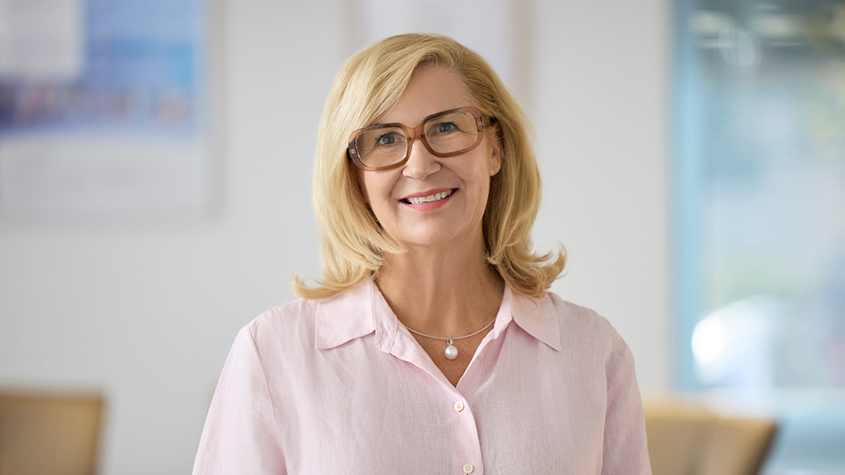
This is where Jen Ehlers, SVA’s Director of Consulting (WA), operates. With a diverse background spanning teaching, international entrepreneurship in Vietnam, and a senior advisory role at a big four consultancy, Jen brings over 25 years of multi-disciplinary acumen to the sector.
Now, as both Director at SVA and Chair of Ngala, one of WA’s oldest family charities, she works at the intersection of government, corporate, and community to drive systemic change in the state. During her time at SVA, Jen has led projects including supporting Ronald McDonald House Charities in outcomes management, evaluating a range of Aboriginal empowerment programs for Wunan Foundation, and facilitating co-design initiatives for health and mental health services in WA and NSW.
We talked with Jen about the unspoken boundaries that sparked her social impact career, the inequality crisis creating a new class of hardship in Perth, and why she is championing a shift from the language of ‘funding’ to ‘investment in WA’s future prosperity’.
Q: Jen, you’ve had a really varied career, but there’s always been a tie back to social impact in some way. What sparked this passion for you?
It was a personal realisation that grew out of my childhood in Wagin, in the WA wheat belt. I had two besties at school, and I remember never being invited to one of their houses, and never inviting him to mine. At the time, I just somehow knew it ‘wasn’t done’. Later I realised why: he lived on the local Aboriginal ‘reserve’ – this would have been one of the last existing WA reserves as their ownership was transferred to the Aboriginal Lands Trust in the 1970s.
This unspoken boundary and what it meant stuck with me; it was an early uncovering that opportunity, belonging, and access were not shared equally: the ‘lucky country’ isn’t lucky for everyone. That sparked my desire to help create communities where everyone has an equal opportunity to flourish, and this is a feeling that’s stuck with me through my career.
Q: What are the most pressing issues affecting the WA community right now?
The compounding effects of cost-of-living pressure and housing stress are at the top of the list. Perth is now one of the least affordable rental markets in Australia, with rents up 80% since 2020 while incomes have risen only 15%. This means we are seeing a shift in demographics of those struggling financially: even dual-income professionals – like nurses – forced to use food banks. In this context, high mining wages are very appealing for people struggling to make ends meet on city or country town wages. However, this disconnect means regional areas in particular suffer when essential staff, like childcare workers, are pulled away from communities to work on mine sites, creating service gaps.
Alongside this, with WA projected to be the most multicultural Australian state by 2050, supporting culturally and linguistically diverse families is also a priority, particularly those who are vulnerable and unclear how to navigate WA’s social system or unaware that help is available.
Our not for profit clients are looking for practical, evidence-based approaches to help them prioritise scarce resources in this tough environment where new challenges arise every day.
Q: WA has a unique resource-driven economy. Is there a disconnect between that wealth and the state’s social outcomes that is preventing these issues from being solved?
We are very good at generating wealth in WA, but we aren’t yet good enough at converting it into the everyday conditions that help communities thrive. We have one of the strongest economies in Australia, yet too many families are experiencing housing instability, family and domestic violence, and mental health challenges. The issue clearly isn’t a lack of money. What needs to change is how that money is allocated by supporting companies to move community investment from the margins into the core of their business strategy, so social impact is built into how they operate, partner, and invest.
Our mining companies are starting to lead the way by building social impact into their core business strategies, both through local procurement and regional investment, and I want to see more WA-based corporates, philanthropists and government organisations follow that lead.
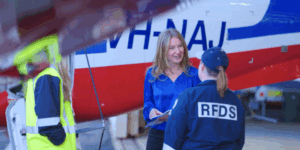
One example is Rio Tinto’s investment in services delivered by the Royal Flying Doctor Service in WA, which we examined through a recent social impact evaluation, including an assessment of the effectiveness of Rio Tinto’s partnership and its contribution to outcomes.
Q: You’re the Board Chair of Ngala, WA’s parenting support charity. How does being on the governance side of a major NFP change the advice you give to SVA’s clients?
It gives me both empathy and discipline. At Ngala, I see firsthand the pressure of rising demand, workforce challenges, and the weight of board accountability. It means the advice I give to SVA clients is grounded in what is actually possible and implementable, not just what sounds good on paper.
I know they need clear, workable paths forward rather than more complexity. It also reinforces my belief that the sector succeeds when we share first hand stories and collaborate rather than competing for funding if another organisation is better suited. This is key to our approach in WA: ensuring that the right organisations are empowered to work together to solve our big issues.
Q: Looking ahead at the next three to five years, what is your vision for the social sector in WA?
I want to see a sector that is more sustainable, more connected, and better able to intervene early, focusing effort where it will have the greatest impact. We need to design services around local community needs, especially in regional and remote WA. This includes locking in a much stronger role for Aboriginal community-controlled leadership. Ultimately, we need to move away from ineffective short-term funding cycles and toward a system that is genuinely set up to deliver lasting impact.
Q: Finally, is there a particular message currently missing from the conversation that you would like to champion?
Yes, we need to stop talking about social issues in WA, and across Australia, as a ‘cost’. The social sector supports people in need; it is also key to state-building and future resilience. When we invest in children, families, and housing stability, we are building a stronger WA. I want to work with government and corporate funders to champion a shift from the language of ‘funding’ to the language of ‘investment,’ because that is exactly what this is.