
Rethinking corporate volunteering
Find out how we're working with Australian Payments Plus (AP+) to move beyond a tick-box approach to corporate volunteering, with engagement opportunities that deliver maximum impact for communities.
- News
 4 min read
This year, the United Nations has put a global spotlight on volunteering and its vital role in progressing the 2030 Agenda for Sustainable Development.
International Volunteer Year 2026 celebrates volunteering as a force for good, driving increased civic engagement and stronger, more cohesive societies. It also shines a light on the changing nature of volunteering since the pandemic, and the opportunities ahead for participation rates to start translating into more meaningful and measurable outcomes for communities.
A recent report by Benevity Impact Labs has found that while corporate volunteering hours are up 175% since 2019, these record numbers of participants aren’t necessarily meeting the real and long-term needs of charities. Volunteers are giving less time, activities are less structured, and only around 20% of nonprofit leaders say that this effort contributes meaningfully to the mission.
There needs to be a shift. Hours are not equating to impact.
What does best practice look like?
At SVA, Innovation is in our DNA – from designing new programs that shift the dial on early years and employment outcomes, to rethinking the ways charities can engage with corporates and funding partners for maximum impact.
“There’s an opportunity for corporates to deliver real and genuine value to the social sector and for that contribution to be more significant than it currently is,” says our Head of Engagement and Corporate Partnerships, Amanda Brisot. “But it takes a willingness from both the charity and the corporate partner to try something different.”
Taking the time to work through the inevitable messiness of innovation can be a challenge for many corporates, and daunting for charities who are increasingly pushed for time and resources. However, Amanda says it’s in that uncertainty, and the robust conversations that follow, that the strongest partnerships are formed, and the most impactful solutions are found.
“It starts by having a very real discussion around the problems you’re trying to solve, and being just as clear about what each party needs from the partnership,” she says.
“Corporates are rarely coming to the table on purely philanthropic terms; they are answerable to their employees, boards, members and customers on delivering business and ESG goals. These discussions uncover where a corporate’s objectives and expertise will make the greatest contribution to your problems.”
There will be ideas that need testing and assumptions that will be challenged.
“The win-win-win scenarios will take shape when the corporate, the charity partner and the communities they serve all benefit from the shared impact created. And striking that complex balance can take time.”
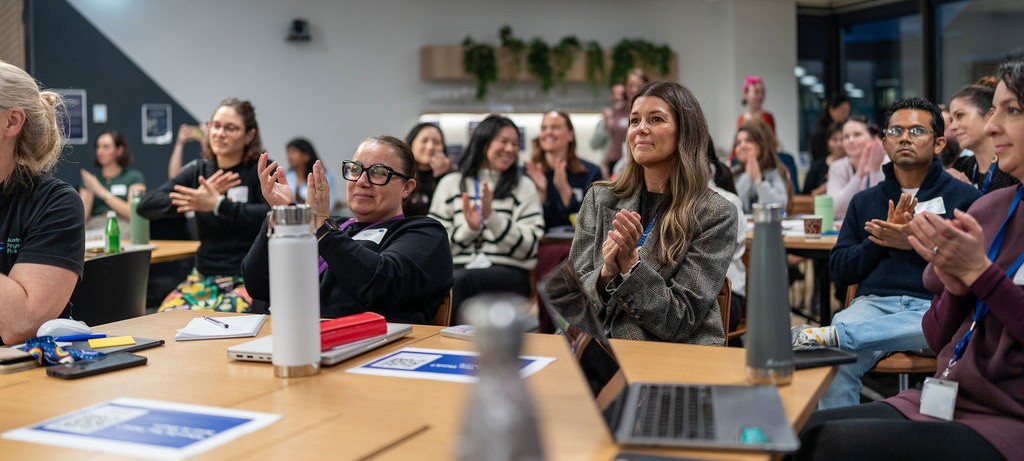
Case study
SVA and Australian Payments Plus (AP+) Impact Sprint
Amanda and her team at SVA work collaboratively with our corporate funding partners to design volunteering and engagement opportunities that are unique to each partnership.
It’s a journey we’ve been on with AP+ since January 2025, when they joined SVA as a Partner in Innovation, committing to support us over the next three years with funding and expertise to shift the dial on disadvantage across Australia.
“From the moment we started working with AP+ as a funder, we’ve been committed to a best practice partnership, and the journey it would take to get there,” says Helena Morrison, Senior Corporate Partnerships Manager at SVA.
“We spent a lot of time understanding what skill sets they had internally, and mapping that to the needs of our team.”
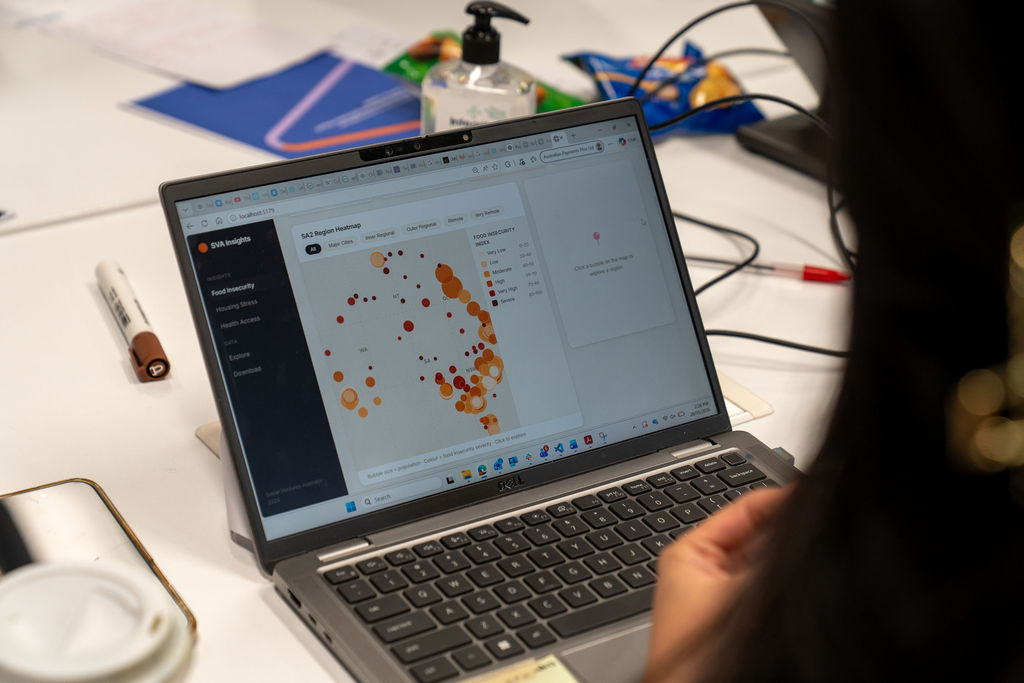
The volunteering opportunities we agreed on in Year One involved professional support for the expansion of SVA’s AI capability, and data support for an SVA research project on communities at-risk of food insecurity.
“In Year One we moved away from a ‘tick box’ approach; we were delivering real value for SVA and the communities we work with,” says Helena.
“But AP+ needed deeper engagement. They’re an organisation with hundreds of people and our early volunteering programs involved just a handful of staff.”
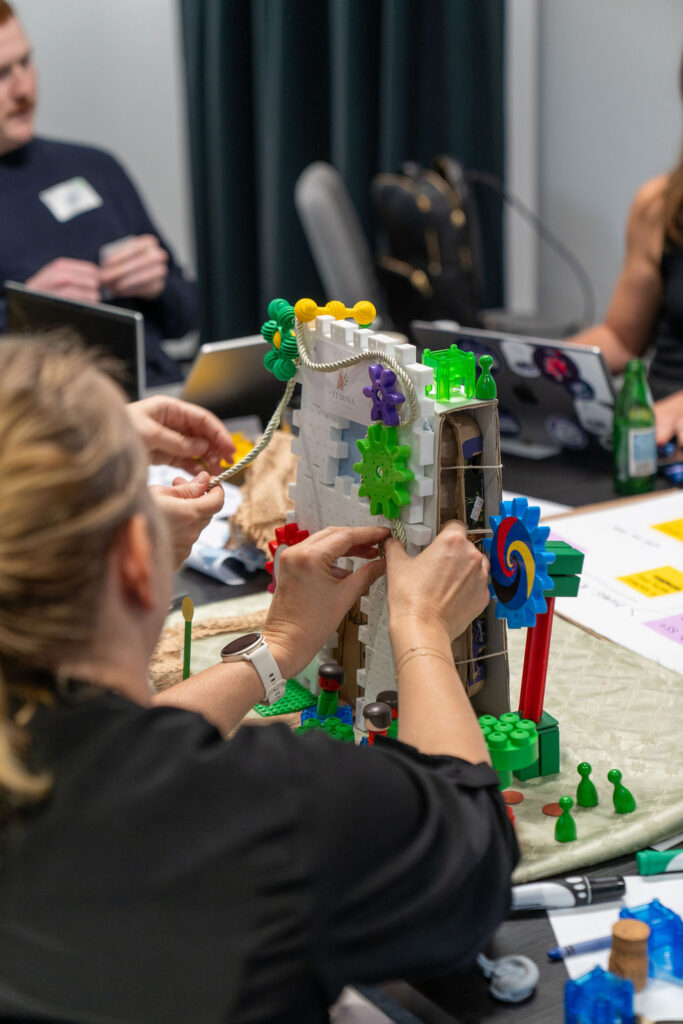
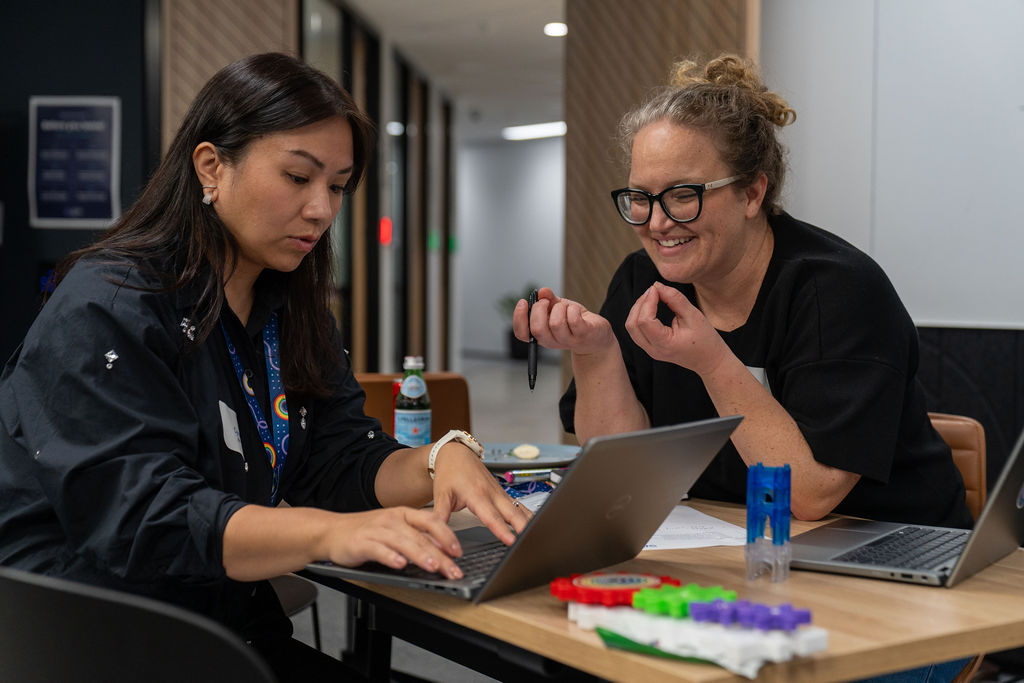
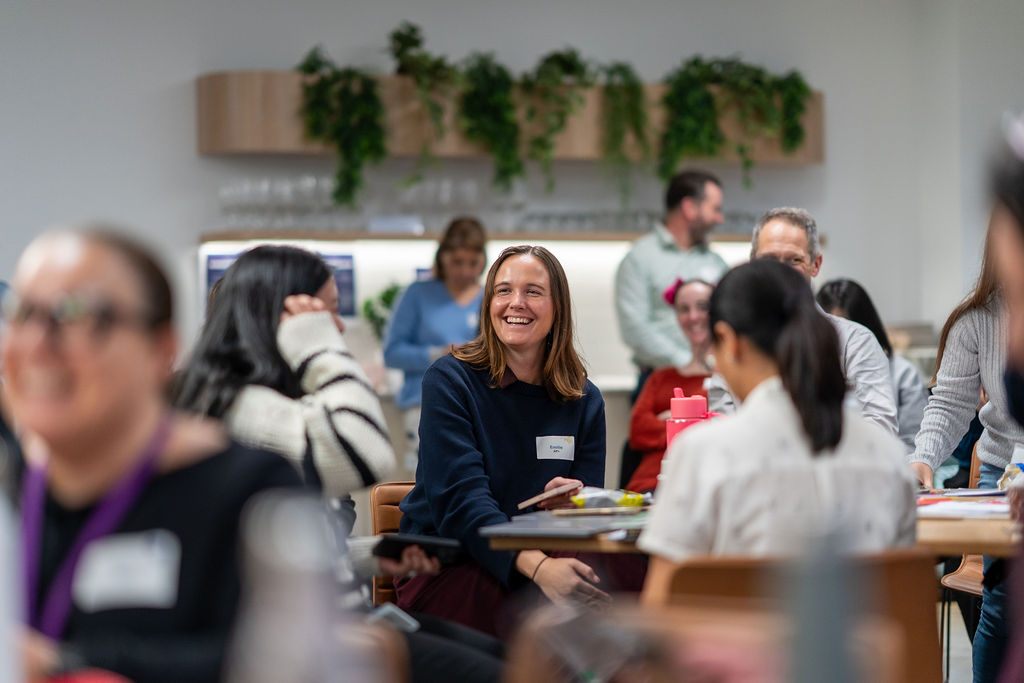
We started to bring our Director of Innovation, Dr Ledia Andrawes, into the conversations. And together, we designed a hackathon-style innovation day – an Impact Sprint that would mobilise cross-functional AP+ teams to prototype solutions for six different challenges across SVA’s focus areas (early years, education, employment and housing).
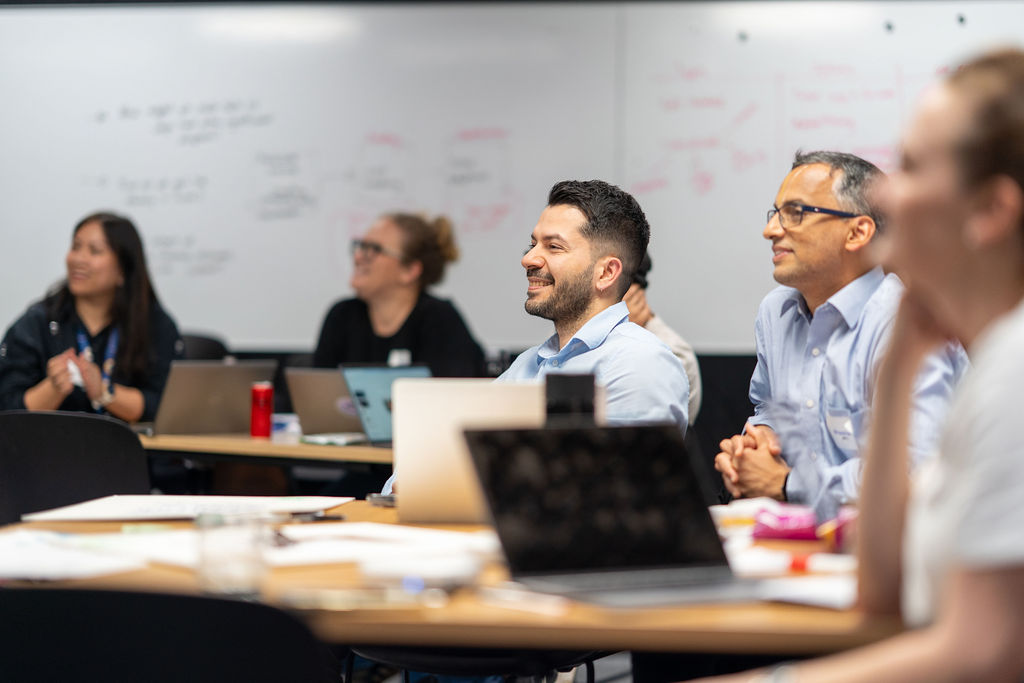
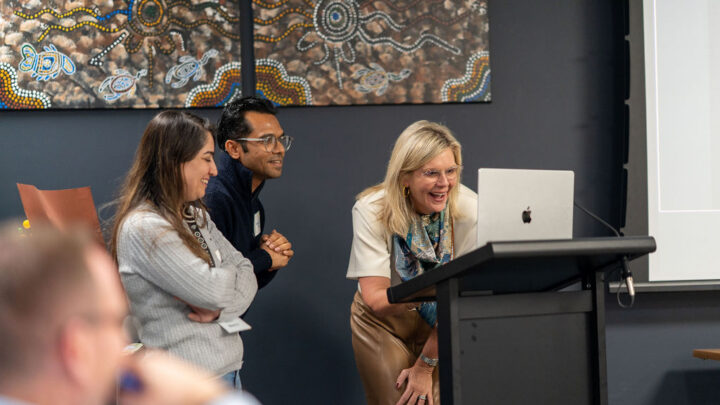
AP+ staff chose their challenge ahead of time, and they brought so much to the table: fresh and diverse thinking, creative framing and prototyping and a healthy sense of competition as the ideas were pitched to the SVA and AP+ CEOs for judging.
“It created genuine and tangible solutions for SVA to further develop through our innovation pipeline,” says Helena, “not to mention a deep connection and keen interest from all parties in seeing those protypes take shape for communities.”
“It was a truly productive experience working alongside an amazing cross-company team. I really enjoyed collaborating with people from different backgrounds, all united by a great cause. The quality of the presentations and the passion demonstrated by every team were inspiring.” AP+ participant.
Finding shared value
As resources become more constrained across the sector, Amanda cautions against resorting to volunteering activities that might help tick a box for funding and reporting requirements, but which may fall short of achieving the best outcome for communities.
“There is a hard cost to delivering volunteering programs – in time, and in money,” she says.
“We are increasingly having conversations with corporates who are aware of this,” adds Helena. “They genuinely want to add value, and are often seeking to work in partnership with charities to understand how they can best do this. Ask the right questions. Find where the shared value lies before exploring what those corporate volunteering opportunities might be.”


Get in touch
We’re looking for passionate partners who see ‘too hard’ as an opportunity to create real change.

