A theory of change as expansive as Royal Flying Doctor Service’s impact
SVA built a theory of change that represents and captures every part of RFDS in WA.
- Case study
 3 min read
In 2023-2024, SVA worked closely with the Royal Flying Doctor Service WA (RFDS) to conduct a comprehensive, organisational impact evaluation. This evaluation provided valuable insights into RFDS’s contribution to Western Australia across key outcome domains, reinforcing RFDS’s role in improving health equity, community wellbeing, and regional resilience.
In this project, to capture and communicate the ongoing work and outcomes, RFDS partnered with SVA to implement robust monitoring and evaluation processes. The project aimed to track the impact, identify areas for improvement, and support continuous improvement in RFDS’s service delivery.
We co-developed, a practical process embedded within existing organisational processes, drawing on existing data collection points (such as the surveys created in the 2023-24 evaluation). This enables meaningful data collection and analysis that is non-burdensome for RFDS staff and stakeholders.
Overall impact
Having an organisation wide theory of change, with priority outcomes and indicators that all programs within RFDS are represented in, can draw on, and use, ensures everyone within RFDS knows they are contributing to the same outcomes.
With an overarching theory of change, RFDS leadership can make strategic decisions that are consistent with but not duplicate what they are already doing. To demonstrate the importance of services and the impact created for communities, RFDS can draw on existing data collection points and indicators, making data collection non-burdensome for staff and community.
This means, that RFDS can spend more time providing critical health services to people and areas that need it most. They have the data and evidence to tell their story, highlight the necessity of their services, and continue building important relationships across Western Australia.
Background
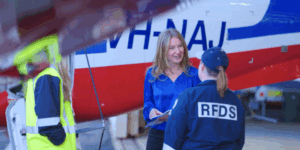
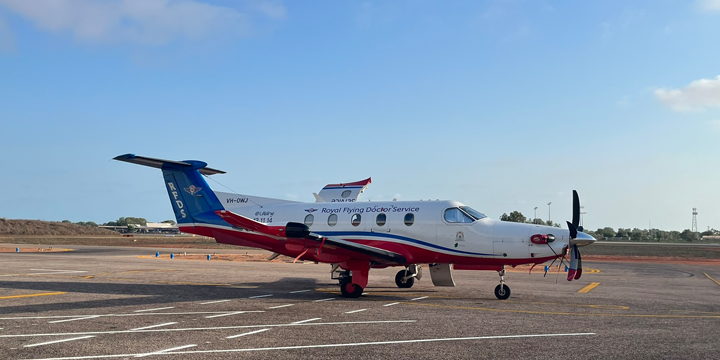
For over 95 years, the RFDS has provided aeromedical and healthcare services for regional and remote WA, underpinned by principles of partnership, safety, innovation and sustainability. In WA, the RFDS has a waiting room that spans 2.5 million square kilometres, making it one of the largest and most remote health jurisdictions in the world. RFDS is committed to ensuring health equity for all who live, work and holiday across the state with nearly 400 doctors, flight nurses, pilots, engineers, logisticians, administrative and corporate staff delivering 24-hour emergency evacuations, inter-hospital transfers including COVID-19 transfers and a range of primary health care services.
Vision and objectives
As RFDS look to prove and improve their services and delivery, they have a clear strategic narrative and plan to measure their outcomes. The messaging about the outcomes being achieved and change created is clear and able to be communicated strongly. This strengthens the organisations ability to plan effectively, partner with organisations, apply for funding, make informed decisions and demonstrate progress and impact over time and over programs.
Role we played
In a collaborative, iterative, and co-produced process, SVA led the RFDS team to define and redefine what was the most important to them, and to be communicated with stakeholders. We tested how to measure the outcomes in a way that had a clear link, drawing on existing tools such as surveys where possible, or program and operational data to complement qualitative data.
As each stakeholder is represented in the theory of change, each stakeholder must provide data to prove their outcomes are being achieved. Instead of creating a new survey, or questions and losing previous year data, we emphasised what is being collected, why, and how. When RFDS revisit their theory of change, (part of the ever-evolving monitoring, evaluation and learning process) they know which survey questions to change, when and why.
Outcomes
RFDS can now articulate the issue they seek to address, how their response is unique, show the link between how their activities, services and programs influence and impact their stakeholders, create change and leads to community health and quality of life outcomes. Within the theory of change, RFDS identifies the inputs required and the operational outcomes that need to be achieved in order to create change for community. This is especially important in an organisation wide theory of change and for such a wide spanning organisation, as it demonstrates cohesion and a holistic approach to making strategic decisions.
I just wanted to share that we are very happy with Chantelle. She has very strong sector knowledge and she very quickly understood our aims for the evaluations – both organisational and for the project. I personally have been very impressed with Chantelle’s work, approach and project management and I feel very confident SVA will deliver exactly what we need to elevate RFDS WA’s impact measurement.”Meghan Hughes • Partnerships Manager

Meet the team
We provide specialist consulting to help social purpose organisations increase their impact. Find out how we can support your organisation or program.
-
 Director, Consulting (WA) Jen Ehlers
 -
 Consultant, Consulting (WA) Chantelle Dabrowski